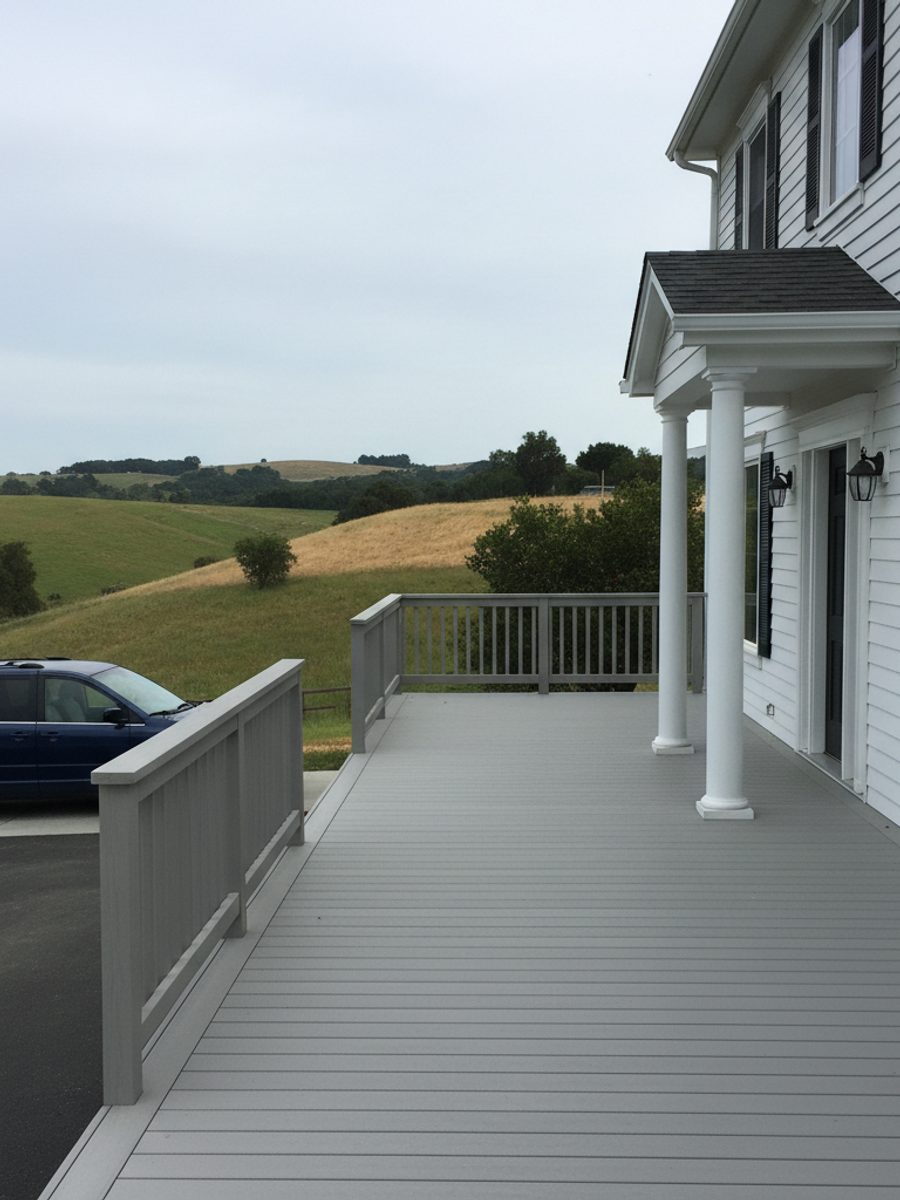
Anyone with a truck and a nail gun can call themselves a deck builder. Most of the time you won't find out who was actually good until year three, when one deck is still solid and another has a ledger board pulling away from the house. Here's what separates the two, and what it actually takes to build a deck that holds up in this part of the foothills.
Start with what's under the deck, not what's on top
A lot of homeowners judge a deck builder on the railing style or the color of the boards. That's the last thing that matters. What matters is the footings. El Dorado Hills sits on decomposed granite in a lot of areas, and that stuff is either soft and crumbly or hard as concrete depending on how deep you go and how wet the season's been. A crew that's dug footings here before knows when they need an auger with a masonry bit instead of a shovel, and knows to go at least 12 inches below grade, more on a sloped lot. If your property drops off toward the back, which is common on the hillier streets around Serrano and Blackstone, the deck might be sitting 6 to 10 feet up on posts on the downhill side. That's not a spot for guesswork on footing depth or post spacing. Ask how they handle it, not whether they've heard of it.
The other failure point nobody asks about is the ledger board, the piece that bolts the deck to your house. It should be lag-bolted or through-bolted into the rim joist, flashed properly so water can't get behind it, and it should never just be nailed on. Most deck collapses you hear about start right there, at the house connection, not at a post out in the yard.
Ask about permits before they do
El Dorado County requires a permit for most decks, especially anything attached to the house or built more than 30 inches off the ground. A builder who's done this for a while will bring up the permit before you do, because they know the inspection schedule: footing inspection before any concrete gets poured, a framing inspection once the joists and posts are up, and a final once the decking and railings are on. If a contractor tells you permits are optional or a waste of time, that's not someone cutting you a favor, that's someone hoping the county never sees the work.
If you're in an HOA neighborhood, and a lot of El Dorado Hills is, places like Serrano, Marble Valley, and Heritage all have architectural review, the HOA approval usually has to happen before the county permit even gets pulled. A builder who's worked those neighborhoods before will know that order and won't have you waiting three weeks because they filed things backward.
Fire zone rules aren't optional here
Most of El Dorado County is in a wildland-urban interface zone, which is a fancy way of saying the county treats wildfire risk as part of the building code, not an afterthought. That affects decking. Within 5 feet of the house, the code generally wants ignition-resistant material, which rules out untreated wood in that zone and pushes people toward composite or fire-rated products. If a builder doesn't bring this up unprompted when you mention you're near open space or a greenbelt, ask directly. This isn't a preference, it's inspected.
Know what a real quote looks like
A serious bid breaks down material, labor, permit cost, and disposal of the old deck if there is one. It should specify the footing size, whether it's using joist hangers rated for the load, and what fasteners are going into the ledger. A one-page number with no material list is a guess, not a bid. If two quotes are far apart, the gap is usually in the framing, not the decking, because the boards on top are the cheap part.
Ask what happens if they hit rock while digging footings, since that's common enough here that any experienced crew should have an answer ready instead of a shrug.
Red flags worth walking away from
- Full payment, or most of it, upfront before any work starts. A deposit for materials is normal. Getting paid in full before the first post hole is not.
- No mention of a permit, or a claim that the county "won't notice" a deck that size.
- No written contract with a start and end date, just a handshake and a text thread.
- Can't tell you the footing depth or post spacing they plan to use when you ask.
- Pushes a stain or sealant job to be done in the middle of a July heat wave. Summers here run past 100°F for weeks at a stretch, and sealant applied on hot boards in direct sun skins over before it soaks in, which means it peels within a year.
What good work actually looks like
A good deck builder in this area treats the ground, the slope, and the fire zone as three separate problems that all have to be solved before a single board goes down. They'll walk your lot and talk about drainage, since a lot of El Dorado Hills yards were graded for runoff toward the street or a swale, and a deck footing placed in the wrong spot can end up sitting in standing water every winter between November and March. They'll know the difference between a deck that needs a simple resurface and one where the frame underneath is shot and needs to come out entirely. And they'll tell you plainly if your project doesn't need what you're asking for, which is a strange thing to look for in a contractor but it's the clearest sign you're dealing with someone who builds decks for a living instead of someone chasing a sale.
If you're weighing a new build, a repair, or just trying to figure out whether that ten-year-old deck is worth saving, that's the kind of walkthrough Alpha Deck Co does before quoting anything.